Why does Naples feel like a city built in layers?
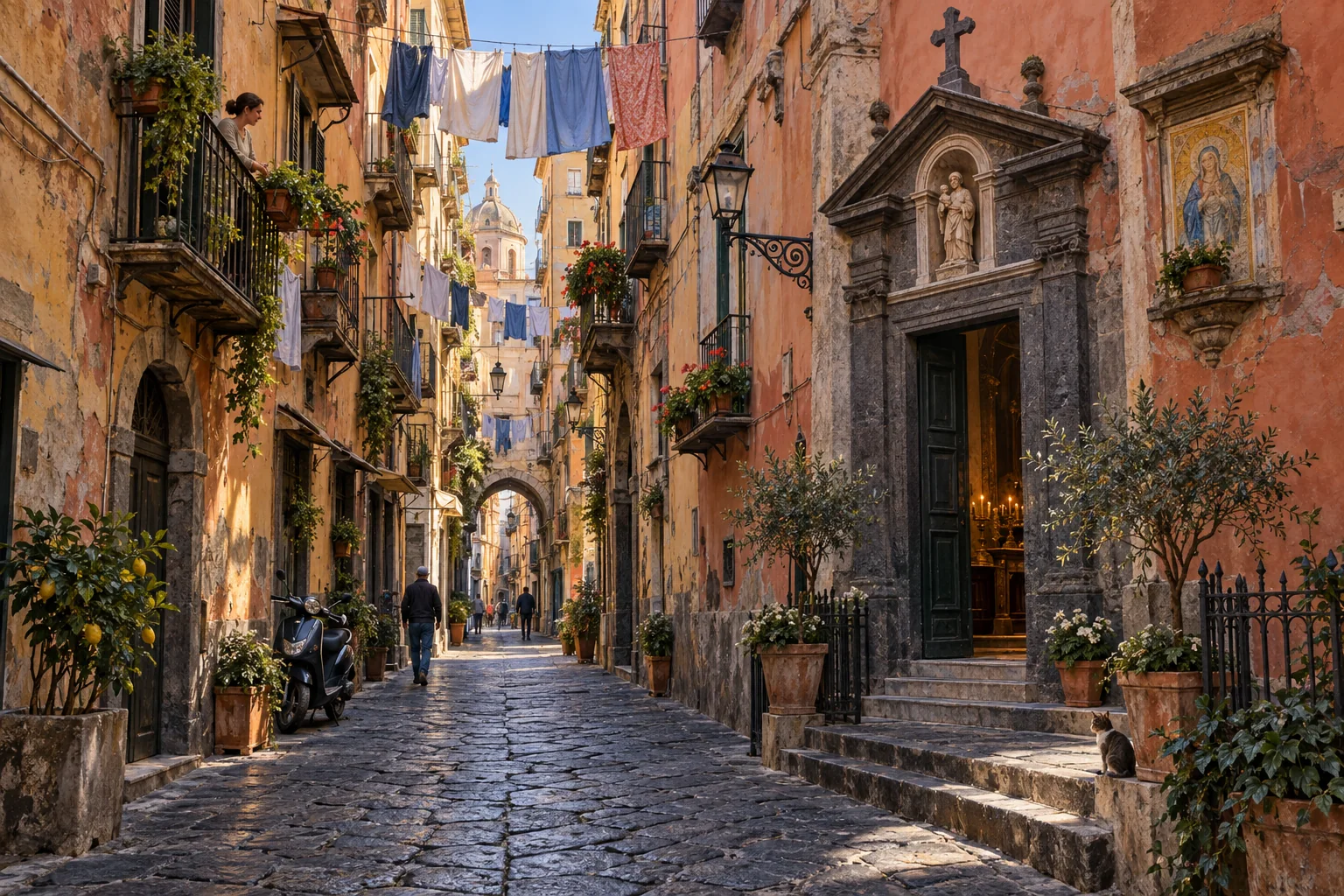
Naples makes more sense when you stop looking for a single historical period. A straight ancient street can lead to an elaborate church, a busy food counter and an apartment balcony carrying this morning’s laundry. These are not interruptions to the history. They are the reason it feels so immediate. Give yourself permission to read the city slowly, beginning with its streets rather than trying to memorize every dynasty before breakfast.
Start with the shape of the streets
UNESCO identifies Naples as a place where successive Mediterranean cultures left a visible imprint. Greek settlers founded Neapolis in 470 BC, following an earlier settlement associated with Parthenope. The surviving street pattern is one reason the historic center carries such significance. You do not need to locate an ancient stone at every corner to appreciate this continuity: the direction in which you walk can itself hold a very old idea. Our historic-center experiences offer guided ways into that story.
A useful exercise is to compare the long sightline down a principal street with the tighter lanes crossing it. Notice how shopfronts occupy ground level while residences stack above. Take a moment in a square and then return to the street. The change in scale helps you understand why a map alone cannot communicate this neighborhood’s rhythm. Avoid assuming every visible building is ancient simply because the route beneath it is old.
Read the buildings as arguments
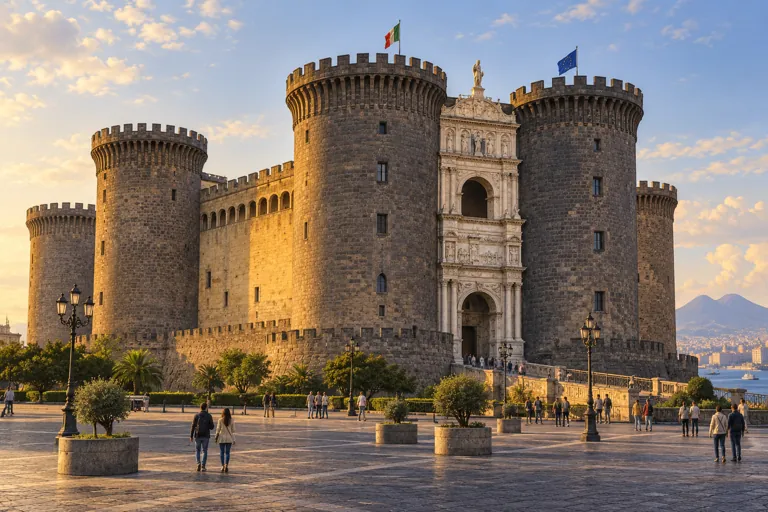
Later rulers, religious communities and wealthy patrons did not build in a vacuum. They worked among structures and habits already there. A grand portal might announce authority; a tiny devotional image might express a much more intimate relationship with a street. Look for differences in materials, the relationship between door and window, and the way a church presents itself to the space outside. These observations create questions a knowledgeable guide can answer more usefully than a hurried list of dates.
Try choosing one building to examine closely. Ask what it seems designed to make a visitor feel: protected, impressed, welcomed, watched? That is interpretation, not a substitute for evidence, but it is a rewarding starting point. When a guide distinguishes surviving fabric from restoration or later alteration, listen carefully. Cities are maintained, damaged, repaired and reused. A perfectly preserved moment is rarely what you are looking at.
Living streets deserve living manners
The center is also a neighborhood where people work and get home. Stand aside to consult your map, ask before photographing someone closely, and keep doorways clear. Churches may be active places of worship even when their art attracts visitors. Follow the instructions at each entrance rather than assuming one rule applies everywhere. Comfortable shoes help with uneven paving, but a slower pace often helps more than equipment.
There is no prize for covering the greatest number of lanes. Pick a manageable circuit and allow a food stop to become part of the experience. A conversation over lunch can be more memorable than an extra monument viewed through a crowd. Our walking-tour collection lets you compare routes and durations; the right choice is the one that suits your interests and energy.
Give the history a second chapter
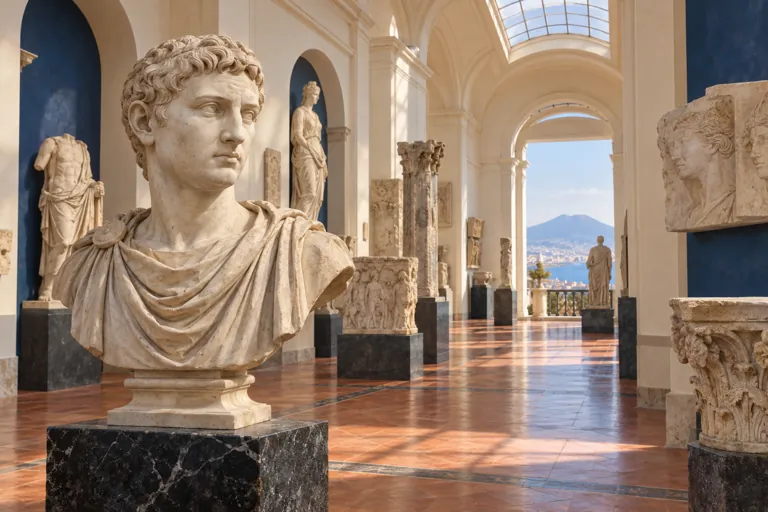
After a street-focused morning, choose one interior or collection for the afternoon. Sculpture, archaeology or a cloister can give physical detail to the broader city story. Keep the transition simple and resist combining every major museum with a full walking tour. Our day-planning guide is designed around an anchor experience and generous pauses.
If your trip continues north, Rome’s walking tours offer another way to explore how ancient routes coexist with modern daily life. Compare the questions you ask in each city rather than expecting the answers to match. Naples is at its best when you let its individual character emerge: layered, sociable, intricate and still very much in motion.
Before the walk, read our Spaccanapoli introduction. Afterward, the Santa Chiara guide offers a quieter way to continue looking at how different periods and purposes meet within one place.
Sources & further reading
Turn a good read into a great day.
Find a highly rated Neapolitan experience that brings these stories to life.
Explore related experiences →