A slower introduction to Naples’ Rione Sanità
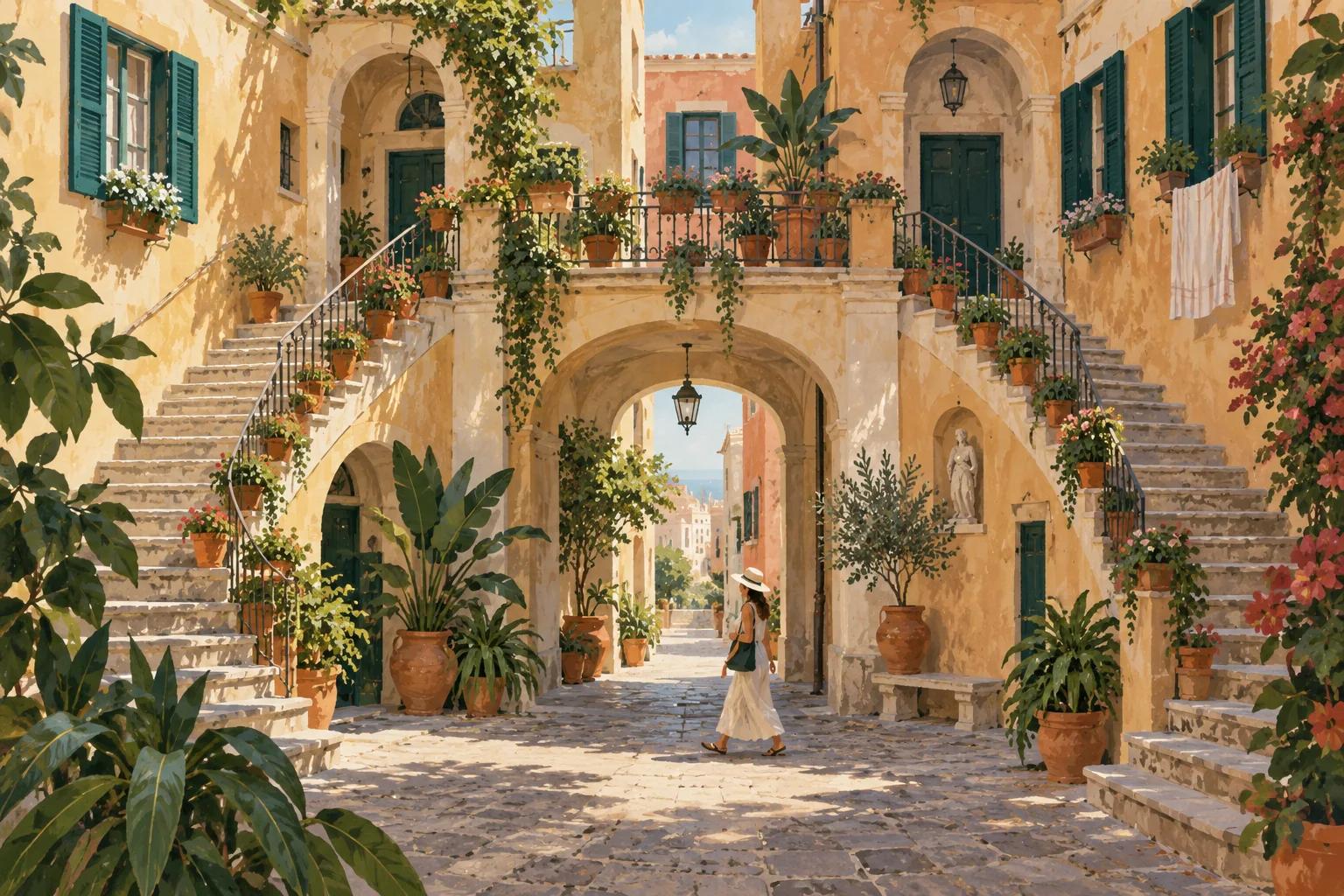
Rione Sanità deserves more than a hurried passage between a catacomb entrance and a famous snack. A rewarding first visit gives the neighborhood time to explain itself: a courtyard staircase, a church doorway, the bridge overhead and the people using the streets around them. Choose a small route and one booked interior rather than trying to gather every landmark into a single morning.
Our introduction to Naples as a city of layers offers the wider context. In the Sanità, those layers become a question of position as well as time. What lies above you, below you and behind an apparently ordinary street entrance can change your understanding of the place.
Begin with the valley and the bridge
The local heritage cooperative’s account of Rione Sanità places the district in a valley below Capodimonte and describes its ancient use for burial. It also explains how the nineteenth-century bridge improved the royal route while bypassing the neighborhood beneath. That is a useful starting point for looking at infrastructure as something that changes daily relationships, rather than simply shortening a journey.
Stand somewhere that leaves the pavement clear and notice the different levels. A road above can carry movement past a street without bringing people into it. Resist reducing the neighborhood to a dramatic story of isolation, however. The streets you are visiting also contain work, family life, creative projects and ordinary errands. Historical explanation should help you see those things, not erase them.
Look into courtyards with permission
Palazzo Sanfelice offers a particularly good reason to look carefully at a staircase. The Italian cultural heritage catalog identifies it as the architect Ferdinando Sanfelice’s own family residence. Its official architectural account gives you a firm name and purpose to carry into your observations, rather than relying on a picture caption alone.
From an allowed viewpoint, follow how a stair connects levels while making a pattern of openings, landings and shadows. You do not need to climb it to appreciate its design. Courtyards and staircases may still serve residents: an open entrance is not blanket permission to wander upstairs, peer through windows or photograph people. A guide can help distinguish what is publicly accessible from what is simply visible.
Give the basilica its own attention
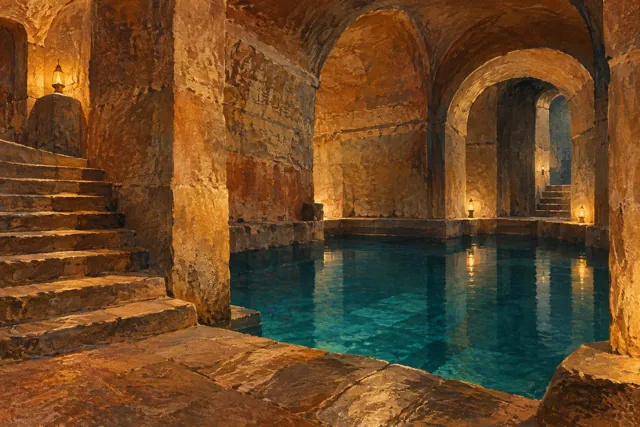
Santa Maria della Sanità is more than a signpost to an underground visit. The basilica’s visitor account describes Fra Nuvolo’s early seventeenth-century building, its tiled dome and its relationship with the Catacombs of San Gaudioso below. Approach the church as a complete space before concentrating on a particular painting or staircase.
Pause to see where your eye travels first. Does the arrangement pull you forward, upward or toward the sides? Then look at how color and material contribute to that movement. Keep voices low, follow the current visitor arrangements and allow worship to take priority. Church access and a separately guided catacomb visit should not be assumed to share the same admission terms.
Choose one interior, then leave room around it
If an underground visit is your main interest, decide which site you actually want. Our guide to the Catacombs of San Gennaro is a useful starting point, but San Gennaro and San Gaudioso are different places with different entrances. Read the exact meeting point on the selected booking and plan the neighborhood walk around it.
Do not infer an easy walk from the short distance between two map pins. Account for gradients, surfaces, crossings and your own pace. Our Naples transport planning guide helps you work backward from an actual appointment. If part of the group needs more rest, make a shorter route a deliberate choice rather than a disappointed version of a longer one.
Listen to the people interpreting the neighborhood
La Paranza describes heritage work as part of a wider local effort to create employment and opportunities. When choosing a guided walk, ask who leads it, what places it actually includes and how long you will spend at each. A thoughtful explanation of a street can be more valuable than several additional stops. Avoid treating every resident as a potential anecdote or every shop as a backdrop.
Browse our Naples walking experiences and check the itinerary for the Sanità specifically; a historic-center title alone does not guarantee this neighborhood. Finish with enough free time to revisit a detail that interested you, buy something you actually want or sit with a coffee. The best memory may be a relationship you noticed between a building and its street, rather than another monument crossed off a list.
Sources & further reading
Turn a good read into a great day.
Find a highly rated Neapolitan experience that brings these stories to life.
Explore related experiences →