How did a silk loom shape a royal town at San Leucio?

A length of silk can look deceptively still. At San Leucio, near Caserta, start by looking along the threads on a loom. Some run the length of the cloth already made. Others cross them to build up the pattern a line at a time. What seems like a single sweep of flowers or a change of sheen in a finished fabric is the result of a sequence of actions. A visit from Naples can follow those actions out of the workshop and into a settlement organized around silk.
Make the Belvedere your destination
The Belvedere di San Leucio is a separate visitor destination from the Royal Palace of Caserta. Both belong to the same UNESCO World Heritage property, which also includes the park and the aqueduct. That designation explains their historical connections. It does not supply transport between them or admission to every component with one reservation. From Naples, plan your journey to Caserta and the onward leg to San Leucio, then work backward from the museum visit you can actually book. UNESCO’s description of the Caserta complex.
The museum says entry is accompanied by an authorized tourist guide or an internal educational operator. Consult its visit arrangements for times and booking contacts. If you are travelling independently, ask which scheduled visit accepts individual visitors in your preferred language. That detail matters more than an optimistic estimate of how quickly you can arrive from the station. Our Naples transport guide helps you separate the legs of a journey and allow for the return.
What is the loom doing?
Imagine running a pencil under alternating taut threads laid across a table. Lift some of the threads and a space opens through which another thread can pass. On a loom, controlling which threads rise makes different structures possible. The Belvedere describes nine restored handlooms associated with fabrics including brocade and damask. While looking at a loom, find the line where the ordered loose threads turn into finished cloth. It is a surprisingly sharp boundary between materials in waiting and a textile that could cover a chair. The museum’s account of its looms and silk production.
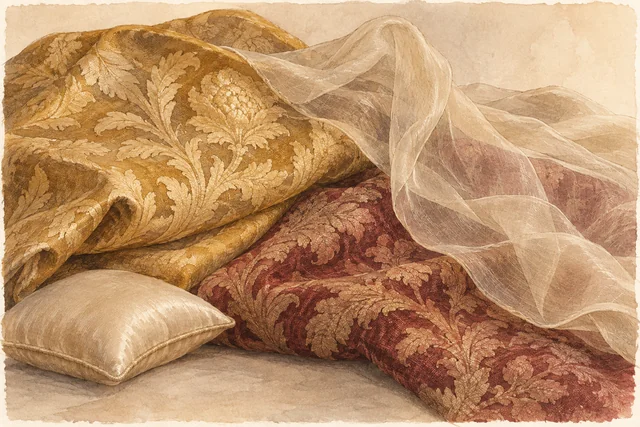
If the guide shows a patterned fabric, change your angle on its surface. In some woven designs, the direction in which the thread catches the light is as important to the pattern as the choice of a dye. A shape that reads clearly from one side can grow faint from another. Ask which feature comes from the weave and which from a change of color. You can take that question back to Naples and try it on a quite different object at the San Domenico Maggiore collection of historic clothing.
What did a royal factory require?
The Bourbon project connected manufacture with housing, education and rules governing a working community. The Belvedere’s account describes training and dwellings for workers as well as production. Look at how much knowledge a workshop had to transmit. Knowing how to set up a loom, respond to a broken thread and read the progress of a pattern could be as valuable as owning the machinery. A plan for continuous production therefore became a plan for people living and learning nearby.
Ask a second question after the first. Who decided how that community should live? Royal sponsorship could provide training and housing while giving the sponsor considerable authority over working lives. The surviving buildings and the museum’s account of the regulations let you explore both ideas. A beautiful finished textile shows the success of an intricate process. It tells you very little, by itself, about who controlled a worker’s hours or chose which kinds of cloth to order.
Leave time for one comparison
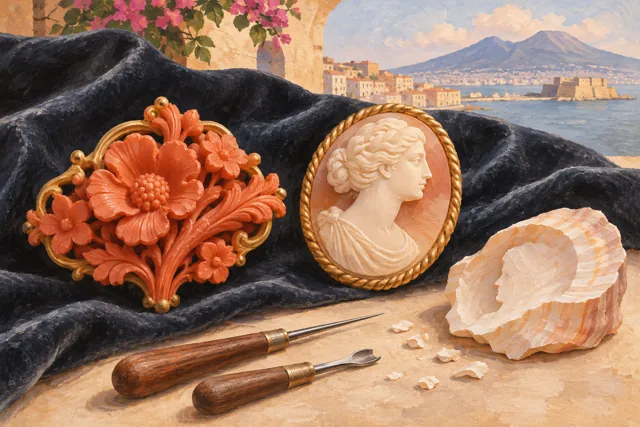
Take the silk visit on its own if you have a limited day. If you are also considering the royal palace, give each visit its actual admission arrangements and travel time. The loom deserves better than the last available minutes after touring an extensive palace. Naples itself offers another comparison in the Ascione coral collection, where a small finished luxury object likewise conceals a sequence of skilled decisions.
Our Naples arts and events collection can help compare a material-focused visit with a gallery or performance. When discussing a San Leucio outing with an operator, ask whether the itinerary enters the silk museum and who accompanies that portion. On the journey home, think back to the boundary on the loom. A few inches separated the unwoven threads from the finished pattern. The place you have just visited shows how much organization a society once placed behind those inches.
Sources & further reading
Turn a good read into a great day.
Find a highly rated Neapolitan experience that brings these stories to life.
Explore related experiences →