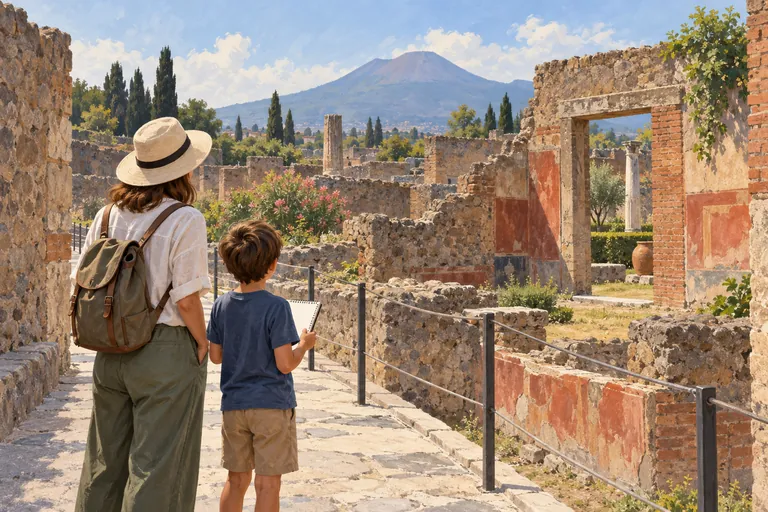
Herculaneum house layouts: what to notice as you explore
A house at Herculaneum is more than a collection of beautiful walls. Its entrances, changes of level and lines of sight can help you imagine how people moved between work, display and domestic life. The trick is to start with the layout before reaching for a room name. Archaeology becomes much more interesting when a doorway is treated as a question.
This is a looking guide, not a promise that particular houses will be open on your visit. Follow the park's current route and barriers, and use the official map for names and orientation. Our comparison of Pompeii and Herculaneum helps with the larger choice of excursion; here, the attention stays inside the domestic spaces.
Read the street before crossing the threshold
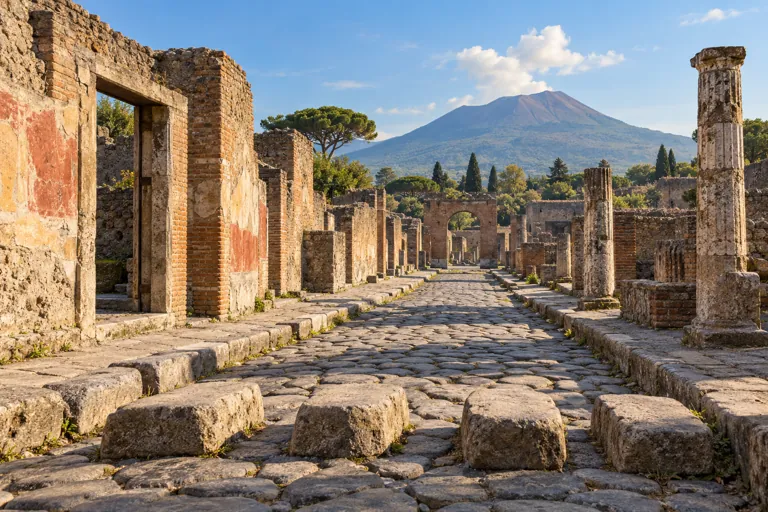
The park's overview of the archaeological area explains the regular street grid and the importance of the residential and commercial quarters exposed by excavation. Start outside a house and notice how its entrance relates to neighboring doors. Is it narrow or conspicuous? Does it reveal a long view inside, or keep the interior hidden?
You need not decide immediately whether a doorway belonged to a shop, a residence or an altered arrangement. Ask what evidence would distinguish those possibilities. A wide opening, a threshold or a surviving partition is a clue, not a complete biography. Houses change over time, and the portion visible today may not tell the whole story of their use.
Look for the relationship between light and rooms
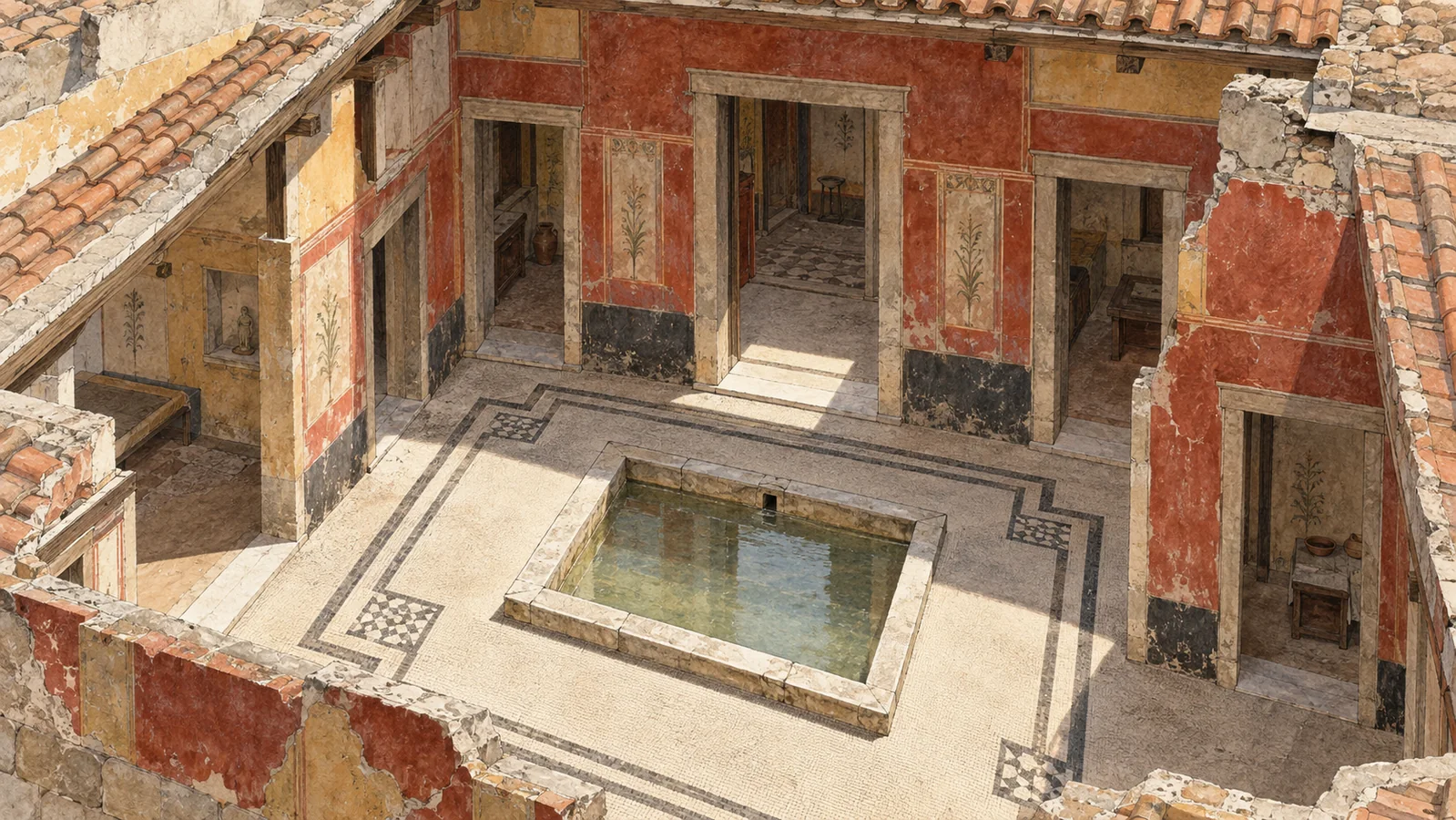
In an atrium house, a central space can organize both movement and light. When you encounter a basin beneath an opening, compare its position with the surrounding doorways and floor decoration. Do the rooms look toward that center? Can you see through several spaces at once? Stand where visitors are permitted and try looking back toward the street as well as forward.
A modern floor plan makes rooms look equally accessible, but a lived house was more selective. Doors, screens, people and household routines could change who entered and what they saw. Resist assigning every small room one permanent modern function. A bedroom label may be helpful, yet the physical evidence and the guide's explanation deserve more attention than a quick analogy with your own home.
Compare display with the work of daily life
Decorated spaces often capture the camera first. After enjoying them, look for the less theatrical features: steps, service routes, storage positions and places where surfaces meet. Think about water, light, cleaning and carrying. These questions bring other members of the household into the picture, including people whose work made an elegant reception possible.
The park describes luxurious residences with gardens and sea-facing terraces, but that does not mean every household had the same wealth or arrangement. Compare what you can actually see instead of turning one grand building into a model for the whole town. Different scales of rooms and decoration are a good invitation to ask about social differences, alterations and the limits of the evidence.
Remember that walls once had companions
Empty archaeological rooms can look more austere than occupied ones. Herculaneum's exceptional preservation includes organic materials that usually disappear. The park's account of organic finds describes surviving wood, doors, stairs, partitions, furniture and written materials. Those discoveries remind us that a house was not simply a shell of stone and plaster.
That is not an invitation to invent furnishings for every room. Instead, ask which features are original, which are restored and which objects were found here but are now kept elsewhere. A careful guide should help separate observation from reconstruction. You can enjoy a vivid explanation while still noticing the words “possibly” and “probably”; uncertainty is part of the scholarship.
Give one detail a little more time
Choose a floor border, a painted panel or the join around a doorway and look at it for a full minute. How does it frame movement? Does it draw attention toward a central space? Our guide to looking at Roman mosaics offers similar questions for decoration, while Naples as a layered city takes that habit into the living urban landscape.
Keep photographs secondary to the route and the safety of other visitors. Do not touch surfaces or step beyond a barrier to improve an angle. A useful photograph records a question you want to remember; it does not have to prove you entered every room.
Choose an excursion that leaves time to look
Browse our archaeology experiences from Naples and check the actual departure point, entrance arrangements and time inside the site. A combined day can work, but the number of stops matters less than the attention available at each. Ask whether the guide's focus matches your interest in domestic life.
If you are staying farther along the peninsula, our sibling guide to planning an archaeological excursion from Sorrento highlights why the starting point changes the day. At Herculaneum itself, one thoughtfully observed house can tell you more than a hurried succession of names.
Sources & further reading
Turn a good read into a great day.
Find a highly rated Neapolitan experience that brings these stories to life.
Explore related experiences →