Reading a Roman mosaic without a textbook
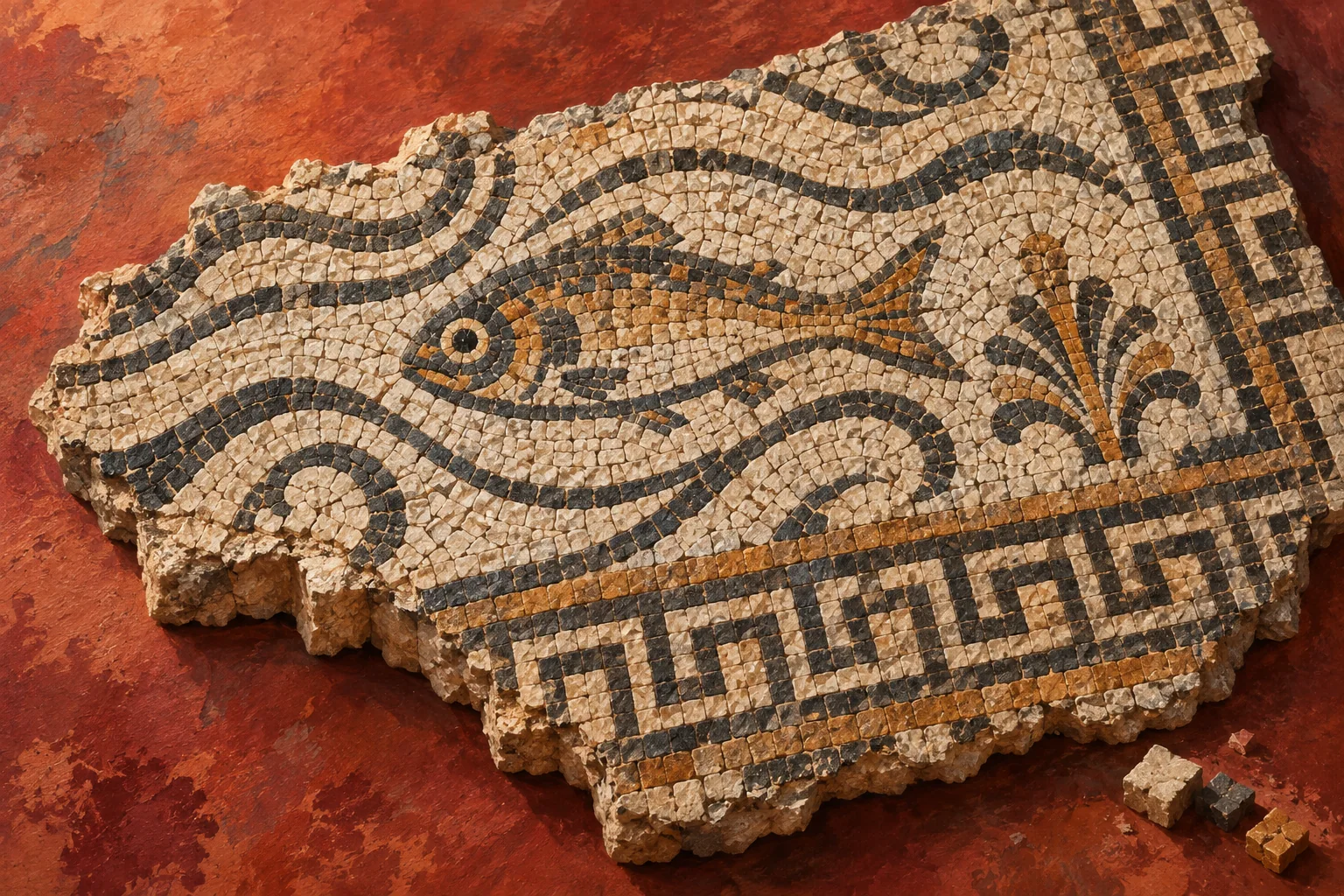
A Roman mosaic rewards a slow look even when you cannot name a god, date a hairstyle or remember a Latin word. Begin with something you can actually see: a border that keeps turning, a fish assembled from small pieces, a shadow that makes a flat surface seem deep. The interesting question is how those choices work together. Naples and nearby Pompeii give you two complementary ways to investigate: the close view of a museum object and the larger setting of an ancient room.
Start with the whole design
Before reading every label, step back far enough to see the arrangement without blocking another visitor. Where does your eye settle first? Is there one central picture, several panels or a repeating pattern? Trace the border with your eyes. A plain frame may concentrate attention; a busy border may turn the approach to the center into a little visual journey. These are observations you can test for yourself, without needing to guess the artist's intention.
Then change your distance. From farther away, tiny pieces merge into a leg, a wave or a fold of cloth. Closer viewing reveals the decisions that made the illusion. Keep behind any barrier and use your eyes or an allowed camera zoom; the best evidence does not require touching anything.
Find the small pieces doing the work
The individual pieces are called tesserae. Choose a modest detail rather than trying to inspect the entire floor: the curve of a tail, the edge of an eye, the meeting of two colors. Notice whether rows follow the outline or run across it. Compare the size of pieces in a detailed area with those in a simpler background. You are looking at practical choices about how to construct an image from separate units.
The MANN collection overview explains that its mosaics largely came from private houses in Pompeii, Herculaneum and other Campanian sites, and mainly decorated floors. The collection includes central figurative panels, known as emblemata. That small piece of vocabulary becomes useful when you notice a picture deliberately set inside a broader pattern.
Put the picture back into a room
A mosaic on a museum wall can feel like a painting. Ask what changes when you imagine it underfoot. Which doorway might introduce the image? Would someone see it while arriving, crossing a room or sitting nearby? Treat those as questions for the label, a plan or a guide. A beautiful pattern alone cannot tell you exactly how every room was used.
Pompeii's official House of the Faun account describes a large house with two atriums and two columned courtyards. It identifies the Alexander mosaic and dancing faun there as copies, with the originals in Naples. This is a helpful reminder to separate three things: an ancient object, its original location and what is displayed in that location today. Our guide to choosing Pompeii or Herculaneum can help you decide whether to add an archaeological setting to your museum visit.
Let the label refine your first impression
Now read. Compare the label's subject, date and findspot with your initial observations. If it identifies a battle, look again at the relationships between figures. Who faces whom? What creates motion? If it describes a decorative border, see whether the repeating unit stays constant. You do not need to turn every animal into a symbol or invent a story for a missing section. An honest unanswered question is more interesting than a confident guess.
Objects also have modern histories. MANN's Alexander mosaic restoration account records its discovery in 1831, transfer to Naples in 1844 and later move from floor display to a wall in 1916. The way we encounter an ancient image can therefore differ substantially from the way its first viewers encountered it.
Try a three-minute looking exercise
Spend the first minute on the whole composition, the second on one small detail and the third on the label. Write down three observations and one question. For example, describe a change in color rather than deciding immediately what it means. If you are visiting with someone else, compare the detail each person chose. Two careful looks at the same object often produce surprisingly different conversations.
Choose a few works and leave room for curiosity. Our MANN guide to avoiding museum fatigue helps turn that approach into a manageable visit. Check the museum's current room-opening notices before planning around a particular work: a collection page describes holdings, not guaranteed access to every object. Continue through our Naples history experiences when a guided explanation would help connect the small stones to the larger city.
To connect the object with the wider city, read how Naples reveals its historical layers. If Rome is another stop on your journey, take the same habit of separating visible evidence from interpretation to the Roman Forum. A museum fragment and an archaeological landscape ask different questions, but both reward a patient first look before an explanation.
Sources & further reading
Turn a good read into a great day.
Find a highly rated Neapolitan experience that brings these stories to life.
Explore related experiences →