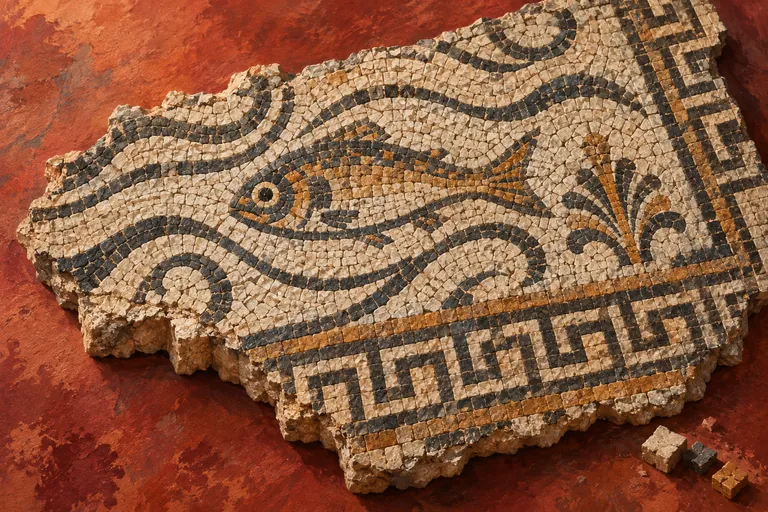
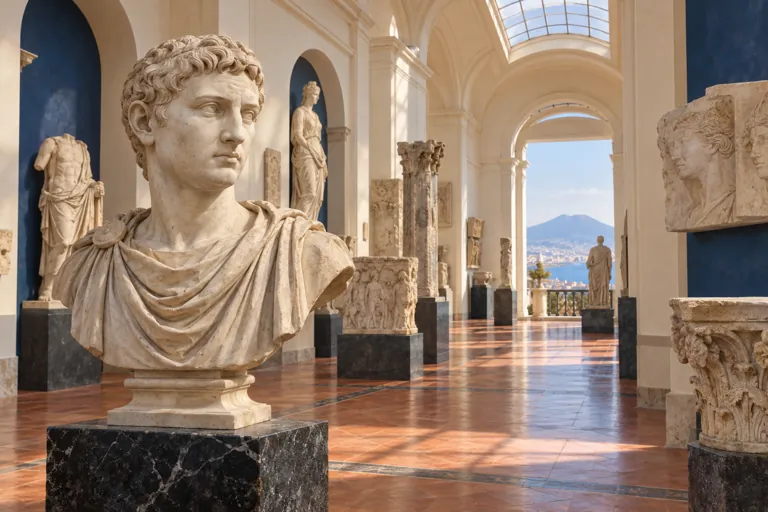
How much time should you spend at MANN in Naples?
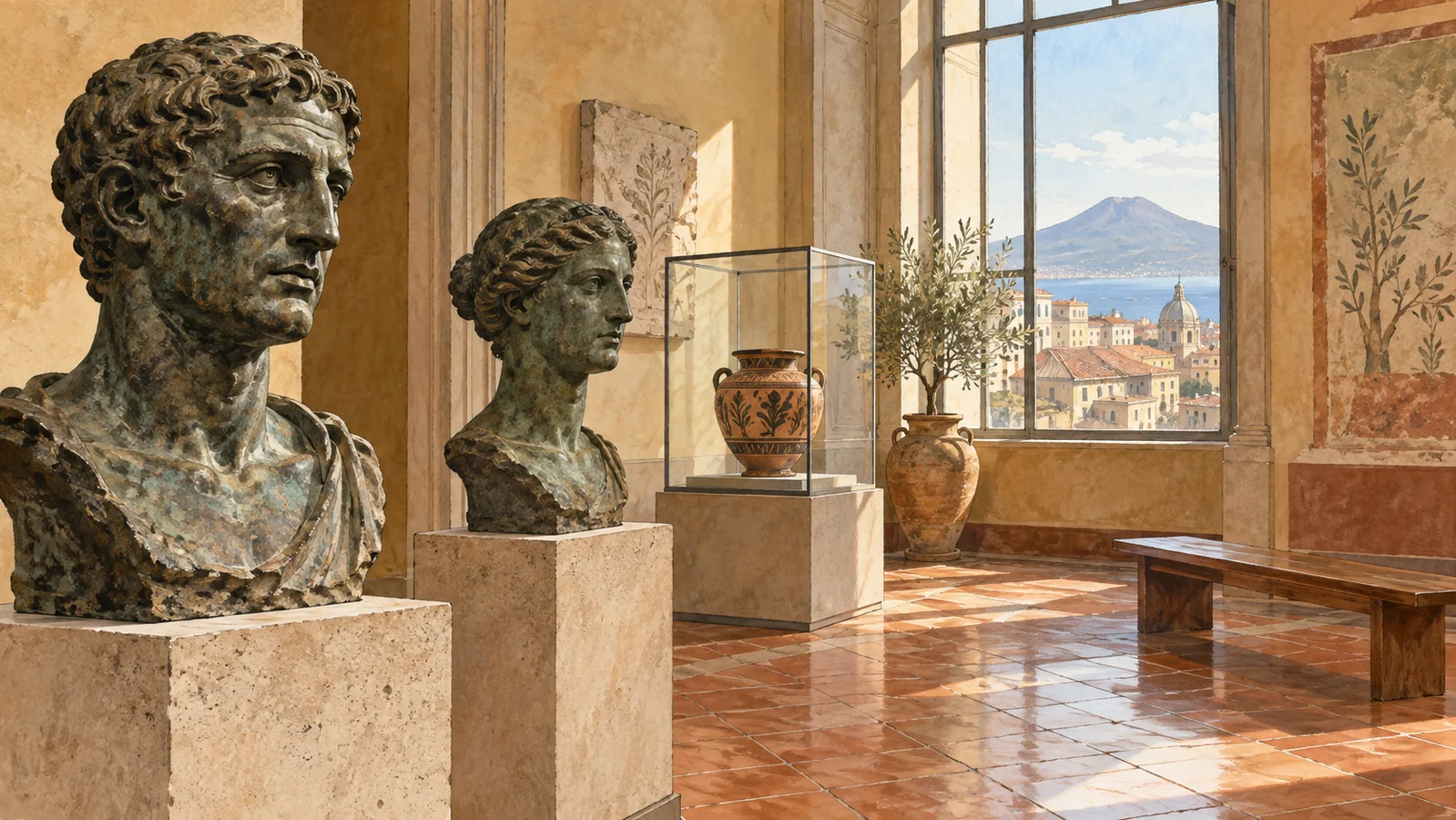
For a first visit to Naples' National Archaeological Museum, a two- to three-hour block is a useful planning starting point. That is our suggested allowance, not a museum rule or a promise that you can see everything. A focused ninety-minute visit can still be rewarding, while someone fascinated by ancient art may happily give the museum most of a day.
The better question is what you want those hours to do. Are you adding context to Pompeii or Herculaneum? Looking closely at sculpture? Introducing children to archaeology? Decide that first, then choose your rooms. Our guide to avoiding museum fatigue at MANN covers the habits of looking; this article helps you allocate the time.
First, check which collections are open
A timing plan is only useful if it matches the museum on your date. Checked on 5 October 2026, MANN's official collection-opening plan lists the Mosaics and Secret Cabinet as closed for rearrangement from 21 September through 30 November 2026. It also lists some collections with reduced hours or rotating access. Do not build an autumn visit around an old photograph of a room without checking that notice.
The museum's official website currently identifies Tuesday as its regular closure day and carries a notice about the temporary western entrance. Check the site again shortly before visiting. Changes to entry arrangements can use up the small buffer you thought you had, especially if a guide is meeting you at a specific place.
If you have about ninety minutes
Choose one main theme and one optional addition. Spend the first few minutes orienting yourself with the official museum map, rather than immediately following the largest crowd. Ask which route best fits the collections you want and any mobility needs. Your useful viewing time starts after tickets, bags and directions have been dealt with.
Then stay with a small number of objects. Look at one from a distance before moving closer; read the label after forming your first impression. Notice material, scale and signs of use. A household object can be as revealing as a spectacular sculpture when you ask who handled it and what problem it solved. Leave the optional addition genuinely optional, particularly if the group is already tired.
If you have two or three hours
This is a comfortable framework for several distinct episodes of attention, with a pause between them. You might begin with sculpture, move toward domestic life and finish with a collection that connects to your next excursion. These are thematic choices, not a prescribed floor-by-floor itinerary; room access on the day should shape the route.
Keep a small reserve of time for an unexpected object. The most memorable encounter may be something you did not recognize in advance. A useful family game is to let each person choose one object and explain why it deserves the group's attention. Nobody has to deliver a lecture. A question about a worn handle or a tiny decorative detail is enough to start a conversation.
If your interests include floors and domestic decoration, our article on reading a Roman mosaic provides background for future visits and open archaeological sites. It is not a claim that MANN's mosaic rooms are currently accessible. Keep the distinction between learning about a collection and being able to enter it clear.
If archaeology is the main reason for your Naples trip
Give the museum a substantial part of its own day instead of attaching it to the end of a tiring excursion. Walking through ancient streets and studying objects in galleries ask different things of your legs and concentration. A separate museum session gives you time to connect the two without feeling that every object is competing with a train departure.
Our Pompeii or Herculaneum comparison can help you choose an archaeological outing to pair with the museum. If your wider journey includes ancient Rome around the Colosseum, notice how a monument visit and a museum visit answer different questions: one emphasizes the setting, while the other can bring material detail close.
When a guide is worth considering
A guide is useful when you want a coherent selection and conversation, rather than simply a route past famous pieces. Browse our Naples history experiences, checking whether museum admission is included, the language, group size and the actual duration. Tell the operator about a particular collection you hope to see, then verify its current access independently.
Before booking the rest of the day, add time for arrival, a break and onward travel outside your gallery allowance. Finish while you still have a little curiosity left. The aim is to leave with a few connections you can explain, not a heroic claim to have completed antiquity before lunch.
Sources & further reading
Turn a good read into a great day.
Find a highly rated Neapolitan experience that brings these stories to life.
Explore related experiences →